
Idle inventory doing its thing
By digital I mean the business landscape created by cheap and ubiquitous computing. By value capture I mean meeting demand, or creating and meeting a previously unidentified demand. There is endless hype about digital, mobile, big data, consumer engagement, and related topics. There are precious few common-sense explanations of how digital creates opportunities for value capture.
Opportunities for digital innovation are probably infinite – limited only by human inertia and lack of imagination. However, those infinite opportunities can be described in terms of more general patterns. By studying those patterns, we can fuel our imagination and accelerate the pace of discovery and innovation.
There is precedent for this type of analysis in a pre-digital context. In the 1950s, the Soviet engineer Genrich Altshuller created a system for classifying not just innovations, but types of innovation. It was called TRIZ, a Russian acronym for a phrase meaning “theory of the resolution of invention-related tasks.” Altshuller, who worked for a patent office, analyzed and described inventions in terms of the more general patterns of innovation they employed.
How does TRIZ work in practice? Consider the example of a hydrofoil boat. TRIZ analysis reveals that that the boat uses the principle “To compensate for the weight of an object, merge it with other objects that provide lift.” An engineer studying this principle might use it to invent something new – for example, a pair of marine binoculars that have a plastic foam casing so they will not sink if dropped in water.
To my knowledge, no one has created a formal digital version of TRIZ. But TRIZ-style analysis can help us understand how digital innovation happens and hence accelerate its pace. To demonstrate how, let’s look at a single, well-known and well-understood company: Uber. Uber and its competitors (such as Lyft) provide an alternative to a taxi service, by matching passengers with private individuals who provide rides in their own personal vehicles.
Uber may seem like a clichéd and obvious example of digital innovation, and a simple one at that. It’s just ride sharing, right? I don’t agree. On the contrary, Uber meets the economic – and psychological – needs of multiple stakeholders in a sophisticated and subtle way. Closer study reveals at least six patterns of value capture in its business model:
Taking advantage of mobile transceivers and cheap connectivity. Smartphones are not simply a new content distribution platform. They are transceivers that can send and receive diverse types of data in both active and passive modes. Uber takes advantage of smartphones as transceivers, using them to match ride-seekers and ride-providers in time and space in the real world. This point may seem rather obvious to digital natives or Silicon Valley VCs. But most of the non-tech companies I’ve seen building “mobile apps” view mobile as just another way of delivering content, or letting people perform tasks “on the go.” Few are taking full advantage of the possibilities provided by transceivers.
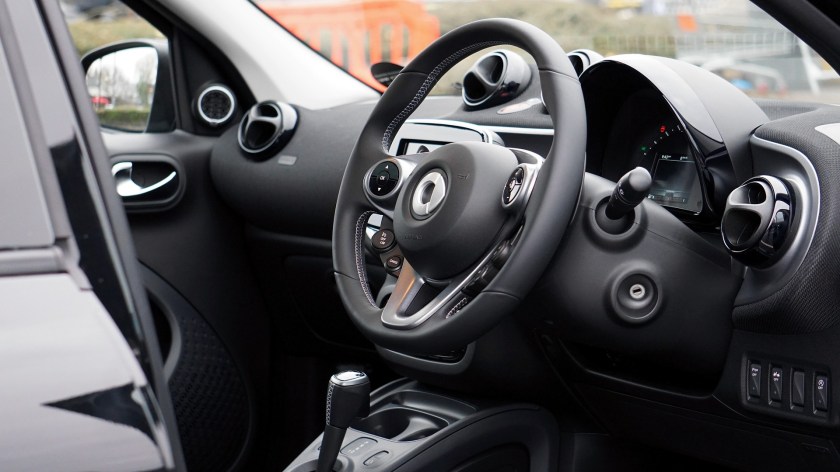
Monetize idle inventory. The special insight of Uber and its competitors was that individual drivers’ cars are a form of inventory – inventory with a very low rate of utilization. In a world where there was no way to communicate the position, usage state, or availability of vehicles, this insight was effectively hidden from view. But transceivers, in the form of mobile phones, completely change this situation. Now a vehicle owner can easily find nearby passengers who want a ride at any hour of the day or night. This subtle change makes it possible to monetize millions of vehicles that would otherwise just be sitting idle. The best part, from Uber’s perspective, is that it doesn’t have to own any of this inventory. It monetizes simply by managing.
Monetize latent skill. Driving is not a specialized skill. In the United States, over 85% of driving-age adults are licensed to drive, and 90% of households own a car. Like private car inventory, this pool of driving skill is chronically underutilized. Uber therefore has a vast pool of potential drivers to draw from. This broad supply keeps labor costs low, and (to the chagrin of taxi drivers in the US and elsewhere) weakens drivers’ collective bargaining power. The result is lower costs and a significant price advantage over taxis.
Simplify transactions. Uber greatly simplifies the process of paying and getting paid. The price of a ride is set remotely and cannot be overridden by the driver. The passenger cannot stiff the driver, because payment is automatic. Neither party has to worry about the passenger having cash, or about the driver’s card-processing system going down.
Reduce transaction costs. Uber does not require a dispatch. It does not require a third-party certifying board to issue taxi medallions. It is less likely to become a politicized racket like taxi oligopolies in many cities and towns – yet another reason that it is despised by incumbents. All of these factors remove middlemen and reduce costs.
Monetize resulting data assets. By tracking every transaction and every ride, Uber is accumulating a massive amount of data that it can use to expand its business adjacently into food delivery (as it has already done with UberEATS), or into yet-unforeseen completely new areas. This data asset also makes Uber a compelling partner for any business that would benefit from a superior understanding of travel times, route optimization, or other details of highly localized logistics.
There’s your “simple” example: six patterns of value capture right there in plain sight, but rarely discussed clearly in the business press, or in all the buzzy literature about digital innovation. We indeed need a digital TRIZ.
 Rob Lawrence