

What is digital? I believe the best way to answer the question is to identify and analyze the opposite of digital, which I call “clerical IT.”
If this exercise seems circuitous, consider that most attempts to define digital are not that illuminating. If you look at Deloitte Digital‘s promotional video, for example, you might conclude that digital means hip office workers congregating around whiteboards and 3D printers. While I’ve already argued that there’s nothing wrong with digital style, I believe that understanding digital this way reduces it to a fashion statement and encourages either shallow adoption or shallow rejection of some genuinely important changes in business culture. The importance of digital becomes much clearer when we consider the nature of the clerical IT that it is replacing.
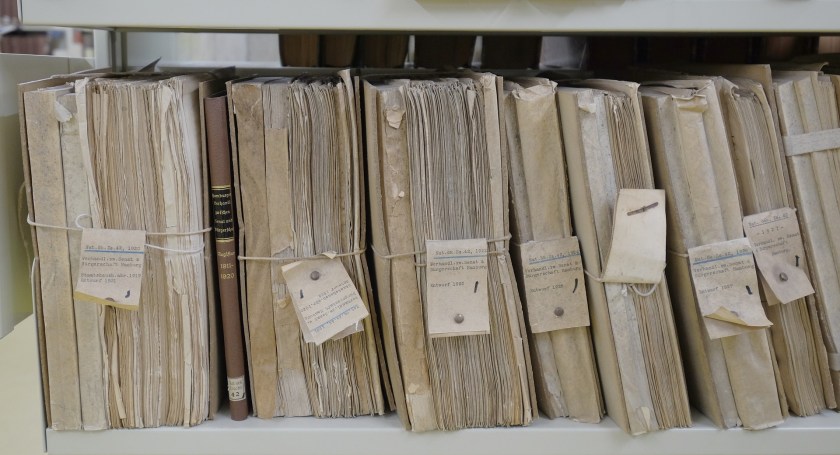
Clerical IT is characterized by the idea that “IT supports the business.” It begins with the unstated and incorrect presumption that “the business” exists externally and prior to any technology. The clerical IT mentality is rooted in the history of IT as data processing, a heritage we have not yet completely overcome. In this schema, IT equals the automation of back-office functions. It is “clerical” in that its primary purpose is to automate the basic transactions of office work: filing, sorting, archiving, and so on. Even when we propose performing such activities on a mobile device (“Let’s have salespeople enter their call data on their iPads!”), we are still trapped in a clerical IT mentality.
The markers of a clerical IT culture are heavy governance processes and a generalized atmosphere of distrust between “IT” and “the business” — as if that distinction made any sense. The dominant mode of development is waterfall or, increasingly, “Wagile,” which is another way of saying that enlightened people are pushing for Agile but fighting the ingrained culture of the organization. Development is based on continual negotiation of requirements and a contractual mindset. Paranoid financial controls may be in place, making it difficult to operate, but in such an environment such controls are actually rational, given that they are the only bulwark against runaway spending.
Perhaps the clearest way to understand clerical IT is through how addresses the classic triangle of “people, process, technology.” In clerical IT the modus operandi is to talk to the people, ask them their process, then automate that process through technology. Note the premise that the business exists prior to and outside the technology. Note the other premise that people, in this case “the business,” can determine their future needs in an informational vacuum and clearly articulate them to developers. As anyone who has ever worked on any development project can tell you, this is simply not true.
With clerical IT defined, we are in a much better position to understand what digital is. Digital is not just the automation of back-office processing, nor a thinly disguised version of such executed on a mobile device. In digital there is no assumption that “the business” exists outside or prior to technology. Digital begins with a holistic look at all of the human and technical resources available in some bounded environment. It then attempts to solve the business problems in that environment in a new way, or eliminate them, or even redraw the boundaries of the environment altogether. A digital mindset is fundamentally continuous with an innovation mindset, which as I’ve argued elsewhere is fundamentally different than a competitive one.
Digital’s approach to people, process, and technology is fundamentally different than that of clerical IT. Digital begins with the people, meaning all impacted parties, working in equal roles in the manner of a GE-style workout. These people are then poised to break apart and solve a complex problem using all the insights at their disposal. The outcome is a “people, process, technology” solution in which any one element, or no element, may dominate. The result is not simply a new way to execute clerical work.
Hegel once commented that history repeats itself. Marx then added “He forgot to mention: the first time as tragedy, the second time as farce.” I believe that in the developing histories of dot-com and digital, the traditional order of tragedy and farce has been reversed. The dot-com era was a farce, even if a somewhat impactful one. The digital era will be a tragedy for anyone who fails to grapple with it or take it seriously. Leaving behind clerical IT is the first and most important step.
 Rob Lawrence